

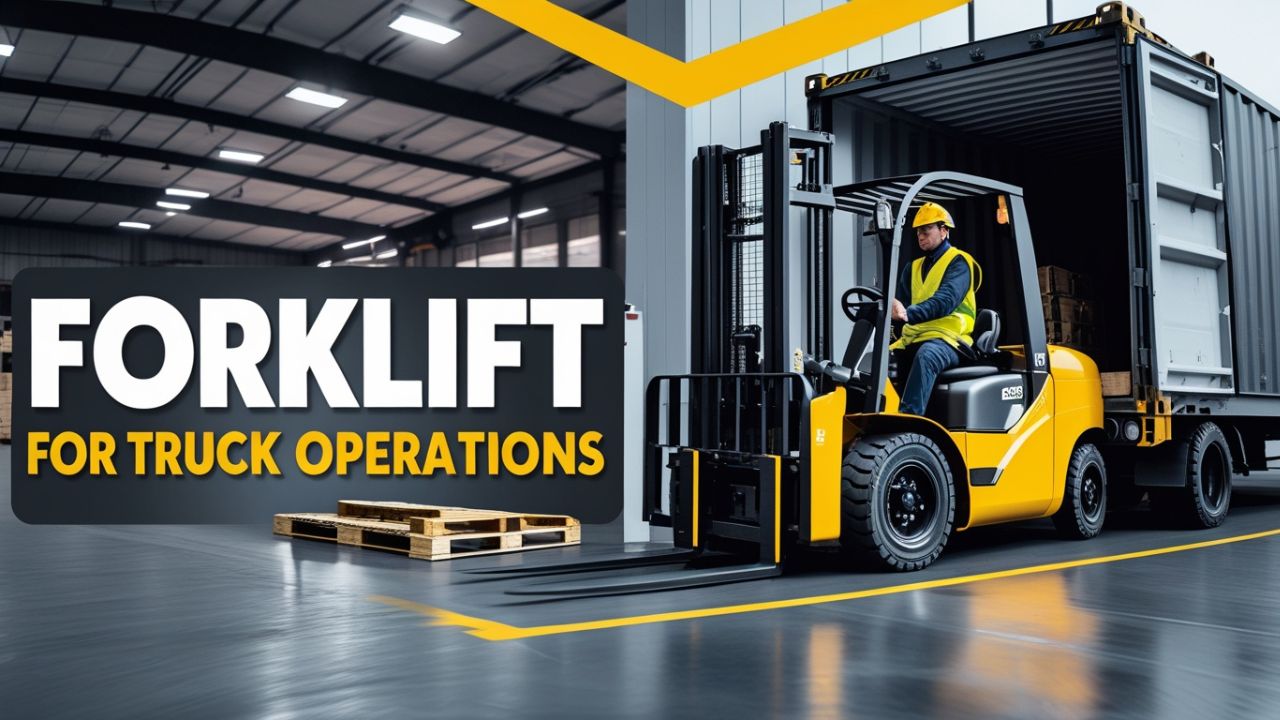

Loading and unloading trucks looks simple. In practice, it’s where many delays and accidents happen. The wrong forklift slows things down. The right one keeps goods moving without drama.
If your work involves trucks every day, forklift choice matters. Not just the brand or price, but the specs. This guide breaks those specs down in plain terms, so you can pick a forklift that actually fits truck operations.
What Are Truck Operations?
Truck operations cover tasks like:
- Loading pallets into trucks
- Unloading containers
- Moving goods across docks
- Staging freight for dispatch
These jobs happen fast and often in tight areas. Forklifts must move in and out of trailers, handle uneven dock plates, and deal with changing loads.
And that’s where specs matter.
Start With the Load
Load Weight
Always start with weight. Not average weight. Maximum weight.
Ask:
- What is the heaviest pallet we load?
- Does weight change with packaging?
Forklifts lose lifting capacity when forks are raised or attachments are added. Choose a forklift that handles your maximum load with margin.
If you run close to the limit every day, it’s not a good idea.
Load Size and Shape
Truck loads vary.
Some are:
- Standard pallets
- Long items
- Uneven or wrapped loads
Larger loads need:
- Wider forks
- Stronger mast stability
- Better side control
Ignoring load shape leads to tipping and damage.
Lift Height and Mast Type
Lift Height Needs
Truck loading usually doesn’t require extreme height. But it does require enough lift to:
- Clear truck beds
- Stack pallets in trailers
- Handle dock-level transfers
Measure dock height and trailer height before choosing.
Mast Choice
For truck operations:
- Single mast works for basic dock work
- Duplex mast offers more flexibility
- Triple mast helps when indoor clearance is low
If forklifts enter trailers or containers, collapsed mast height matters.
Power Type: Electric vs Fuel
Electric Forklifts
Electric forklifts work well when:
- Operations are indoors
- Noise needs to stay low
- Emissions are a concern
They are common in warehouses with covered docks.
But they struggle on rough yards.
Diesel or LPG Forklifts
Fuel forklifts handle:
- Outdoor docks
- Uneven surfaces
- Heavy loads
Diesel is strong but noisy. LPG is cleaner and works both indoors and outdoors with proper ventilation.
Tires: A Small Detail That Matters
Tires affect grip, safety, and comfort.
Cushion Tires
- Best for smooth indoor floors
- Lower turning radius
- Not suitable for outdoor yards
Pneumatic Tires
- Better for uneven ground
- Handle ramps and dock plates
- Slightly wider turning radius
For mixed indoor and outdoor truck work, pneumatic tires are often safer.
Turning Radius and Size
Truck docks are busy and tight.
A forklift with a large turning radius:
- Takes longer to line up
- Increases risk of bumps
- Slows down loading
Compact forklifts work better when:
- Docks are narrow
- Space between trucks is limited
But smaller forklifts usually carry less weight. Balance is key.
Visibility and Operator View
Why Visibility Matters
Truck operations rely on speed and accuracy.
Poor visibility causes:
- Fork damage
- Trailer wall impacts
- Load misplacement
Look for forklifts with:
- Clear mast design
- Good overhead guard spacing
- Adjustable seating
Small improvements here reduce accidents.
Comparison Table: Forklift Types for Truck Operations
| Feature | Electric Forklift | LPG Forklift | Diesel Forklift |
| Best for | Indoor docks | Mixed use | Outdoor yards |
| Emissions | None | Low | High |
| Noise | Low | Medium | High |
| Power | Medium | Medium–high | High |
| Tire options | Cushion | Cushion or pneumatic | Pneumatic |
This table gives a rough idea. Actual performance depends on model and setup.
Attachments for Truck Work
Some operations need more than forks.
Common attachments include:
- Side shifters for alignment
- Fork positioners for mixed pallet sizes
- Clamps for non-palletized loads
Attachments add weight and reduce capacity. Always factor that into your choice.
Safety Features to Look For
Modern forklifts include safety aids.
Useful features include:
- Speed limiters
- Stability control
- Load weight indicators
These don’t replace training, but they help reduce errors.
Common Mistakes in Forklift Selection
- Choosing based on price alone
- Ignoring dock height and yard conditions
- Underestimating load weight
- Forgetting attachment impact
These mistakes lead to breakdowns and delays.
Final Buying Checklist
Before you decide, confirm:
- Maximum load weight
- Dock and trailer height
- Indoor vs outdoor use
- Surface conditions
- Required attachments
Clear answers prevent wrong choices.
FAQs
What forklift is best for loading trucks indoors?
Electric forklifts work well for indoor docks with smooth floors and standard loads.
Can one forklift handle both indoor and outdoor truck work?
Yes, LPG forklifts with pneumatic tires are often used for mixed environments.
Do attachments affect forklift capacity?
Yes. Attachments add weight and reduce lifting capacity. Always check the updated data plate.


