

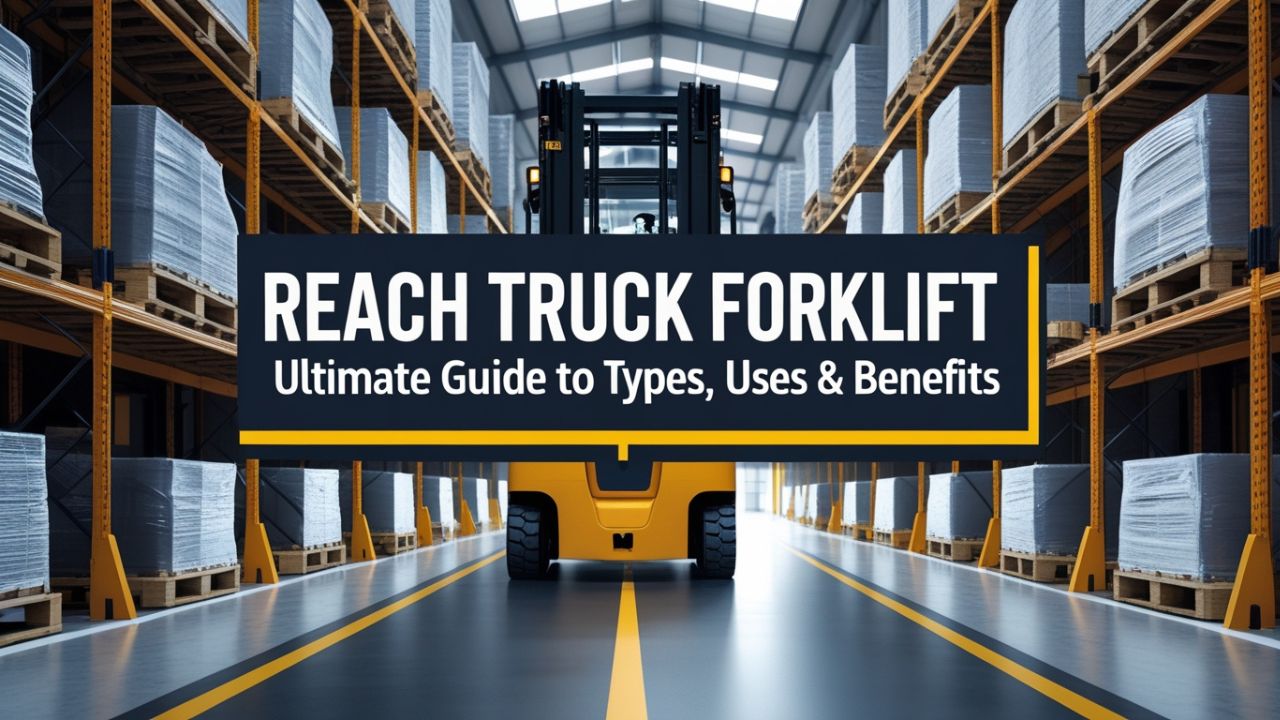

What is a reach truck?
A reach truck is a narrow-aisle lift truck built for racked-pallet storage. It extends forks forward into racking. Reach trucks are usually electric and made for indoor use on smooth floors. They do not have large counterweights like counterbalance forklifts.
Main types of reach trucks
- Stand-up / single-reach: Classic design for single-deep pallet access.
- Double-deep reach: Telescoping forks reach two pallet positions in.
- Turret / VNA (very narrow aisle): Rotate the mast to pick without turning the truck.
- Moving-mast reach: Mast shifts forward and back for higher lifts.
- Multidirectional / multi-way: Moves side to side for long loads and irregular shapes.
These types cover most warehouse needs and let you pick by aisle width and load type.
How reach trucks are used
- High racking in distribution centers.
- Narrow-aisle warehouses where space is tight.
- Order picking at pallet or case level.
- Double-deep racking systems with special reach models.
Typical workflows place reach trucks on fast pick aisles and reserve counterbalance trucks for dock work. Reach trucks spend most time inside racking lanes.
Recommended products

Sit Down Reach Truck UAE
Get QuotationSubmit Quotation for Price
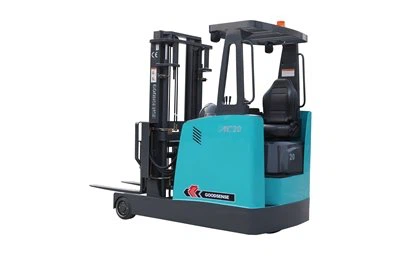
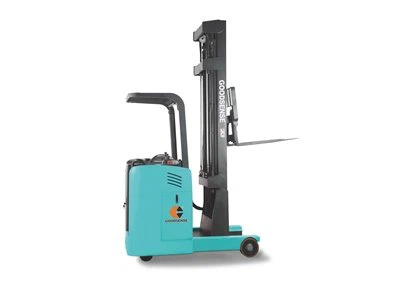
Stand Up Reach Truck UAE
Get QuotationSubmit Quotation for Price
Key benefits
- Better storage density: Narrower aisles mean more racks and more pallets per square meter.
- Tighter turning radius: Easier to work in compact layouts.
- Higher lift heights: Reach trucks lift pallets higher than many counterbalance trucks.
- Electric operation: Zero tailpipe emissions indoors and lower noise.
These benefits help warehouses use space and move stock faster.
Limits and when not to use
- Not for outdoor use or rough ground. Reach trucks need smooth floors.
- Lower capacity than many counterbalance trucks. Heavy loads may need a different truck.
- Taller mast and stability limits require good operator skill.
If your job has mixed indoor-outdoor work or heavy uneven loads, a different truck may be better.
Quick comparison with counterbalance forklifts
- Reach truck: Best for narrow aisles and high racking. Electric. Less capacity.
- Counterbalance: Better for outdoor or uneven surfaces. Higher capacities and more fuel options.
Pick by your floor type, aisle width, and load weight.
Attachments and options
- Side shifter: Move forks side to side for small lateral adjustments.
- Fork positioner: Change fork spacing without leaving the cab. Good for mixed pallet sizes.
- Rotator: Rotate loads for tipping or re-orienting.
- Load backrest: Keep loads stable at height.
- Cold-store options: Special seals and heaters for freezing environments.
Ask suppliers about compatible options for the model you pick.
Cost and buy vs rent
- New reach trucks cost more than basic counterbalance models. Price depends on lift height and capacity.
- Used reach trucks can save money but check battery life and mast condition.
- Renting or leasing is a good short-term option during seasonal peaks or while testing layouts.
Factor in battery replacements, chargers, and service contracts into the total cost.
Choosing the right reach truck
- Measure aisle width and racking height.
- Check load weight and pallet depth (single or double).
- Decide stand-up or seated operator comfort.
- Look at battery runtime and charging speed.
- Ask about spare parts and dealer service.
Implementation tips for warehouses
- Map aisle flow to reduce congestion. One-way lanes help in busy sites.
- Reserve charging stations away from pick lanes to avoid delays.
- Train operators on mast movement and high-lift handling.
- Start with a pilot aisle before converting large sections to narrow aisles.
Safety and operator training
Operators must follow powered industrial truck rules. Training should cover pre-operation checks, load handling, safe travel, and site-specific hazards. Keep records of training and evaluations. Regular refresher checks reduce accidents.
Maintenance basics
- Daily walk-around checks for forks, mast, and controls.
- Battery care: water level, charge cycles, and correct handling.
- Scheduled inspections and mast lubrication.
- Keep tyres, brakes, and steering tuned to maintain stability.
Next steps
- Measure your aisles and racking now.
- Talk to two suppliers and compare working aisle widths and battery specs.
- Arrange a demo day to try the model in your actual rack.
FAQs
Q: Can a reach truck work outside?
A: Generally no. Reach trucks need smooth, even floors. Outdoor surfaces and wet or icy ground make them unsafe. Use a counterbalance truck outside.
Q: What aisle width do I need for a reach truck?
A: It depends on the model. Very narrow aisle (VNA) trucks work in tighter aisles than standard reach trucks. Measure your racking and ask suppliers for the model’s working aisle width.
Q: How high can a reach truck lift?
A: Many reach trucks lift above standard heights and can reach high racking. Exact heights vary by model. Check the lift height spec before you buy or rent.


