

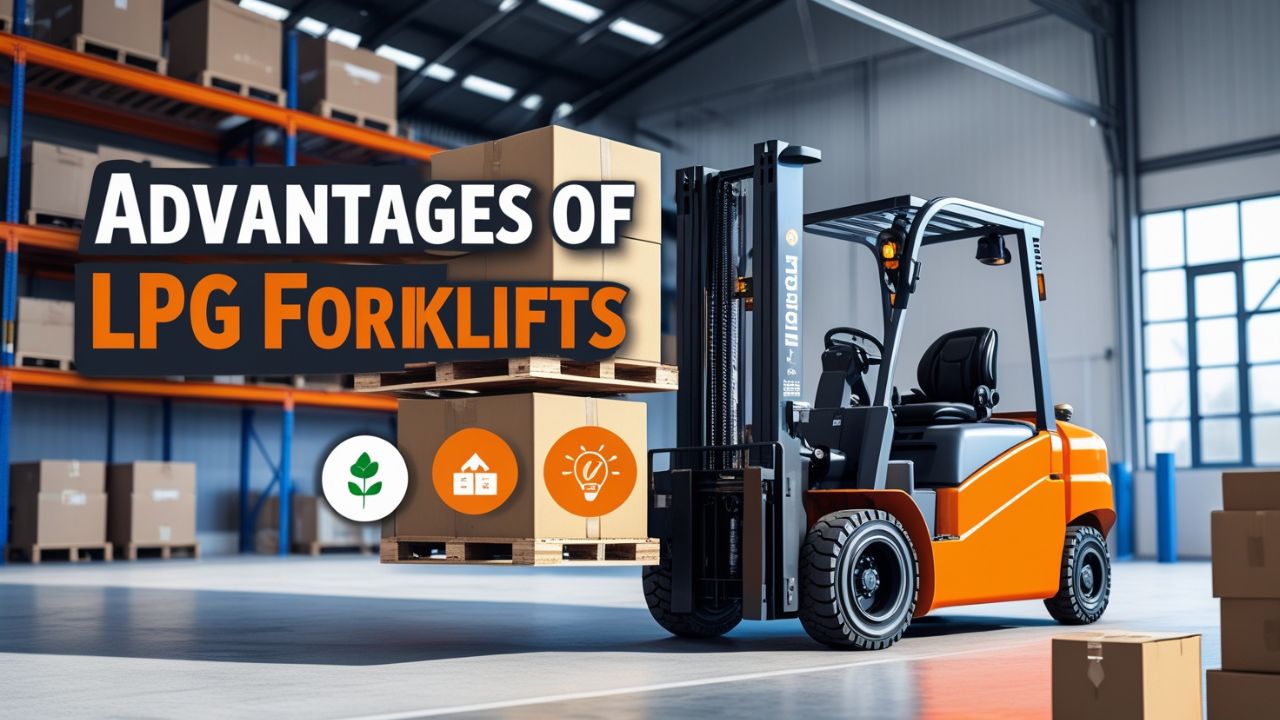

LPG (liquefied petroleum gas) forklifts are common in warehouses and yards. They run on propane. That makes them different from diesel and electric models. Here are the clear, useful benefits. Short sentences. Plain language.
Fast refueling, less downtime
Refueling an LPG forklift takes minutes. You swap or refill a cylinder and go back to work. No long charging waits. No battery change rooms. For businesses with long shifts, that matters. Less idle time. More productive hours.
Consistent power through the shift
An LPG engine keeps delivering steady power until the tank runs low. Performance stays predictable. You don’t get the gradual power drop you sometimes see with batteries. That makes planning easier for long tasks and outdoor work.
Good for indoor work (with ventilation)
LPG burns cleaner than diesel. It produces less soot and fewer particulates. That makes it better for indoor spaces. But you still need ventilation and standard safety checks. Follow local rules and good practice. Don’t assume “clean” means no precautions.
Quieter than diesel
LPG forklifts are generally quieter than diesel machines. Less noise helps in busy warehouses. It reduces stress on staff. And it makes verbal communication easier on the floor.
Lower particulate emissions
Compared with diesel, LPG produces fewer fine particles. That helps air quality inside buildings. It can reduce cleaning needs and lower soot on goods and racking. For workplaces sensitive to dust or residue, that’s useful.
Cost flexibility
Fuel cost for LPG can be lower or more stable than diesel in many places. Initial purchase cost is often lower than electric models. Running costs depend on local fuel prices and duty. But in many operations, LPG offers a reasonable operating cost without the high upfront price of battery systems.
Easier refueling infrastructure
Propane is widely available. You can set up exchange cylinders or have onsite storage. Many suppliers service forklifts and can deliver. For companies without heavy investment capacity, this is a practical advantage.
Works well in cold weather
Batteries lose range and performance in cold conditions. LPG engines start and run reliably in lower temperatures. If you operate outdoors or in unheated spaces, LPG can be more dependable than electric options.
Familiar maintenance and service
Mechanics and service centres know combustion engines well. Parts and technicians are often easy to find. Routine maintenance is straightforward. That reduces downtime from specialist repairs. But remember: engine service is still required. Don’t skip it.
Flexible use — indoor and outdoor
LPG forklifts bridge a gap. They work for indoor environments where exhaust limits diesel use. And they work outdoors without the range limits of batteries. If your site needs both, LPG can be a simple compromise.
Rapid return to work after refuel
A quick refuel means the machine returns to duty almost immediately. That matters for tight schedules. It also reduces the need for extra machines to cover charging time.
Lower visible exhaust and odor
Compared to diesel, LPG exhaust is less smoky and less smelly. That improves the workplace atmosphere. It can also reduce complaint risk from nearby tenants when working near shared spaces.
Balanced environmental profile (with caveats)
LPG often emits less particulate matter than diesel. But it is still a fossil fuel. It produces CO₂. If reducing overall carbon footprint is a top priority, electric or hydrogen options might be better. LPG is a pragmatic, lower-particulate choice, not a zero-emissions solution.
Things to keep in mind
LPG requires safe cylinder handling. Tanks must be stored and secured correctly. Staff need basic training on swaps and leaks. Regular checks for fittings and hoses are essential. Also factor in local fuel prices and any emissions rules. For heavy indoor use without good ventilation, electric may still be the safer option.
FAQs
Are LPG forklifts safe to use indoors?
Yes, when ventilation and safety rules are followed. LPG has lower particulates than diesel. But it still produces combustion gases. Train staff and monitor air quality.
How long does an LPG tank last?
That depends on the forklift and workload. Typical tanks last several hours on a normal shift. The real answer depends on engine size, load, and duty cycle. Most sites plan swaps mid-shift if needed.
How do LPG forklifts compare to electric ones?
LPG refuels fast and gives steady power. Electric forklifts are quieter, cheaper to run per hour, and produce zero tailpipe emissions. Electric needs charging time or battery swaps. Choose LPG for long shifts, mixed indoor/outdoor use, or where charging infrastructure is hard to install. Choose electric when emissions and noise must be minimized.


