

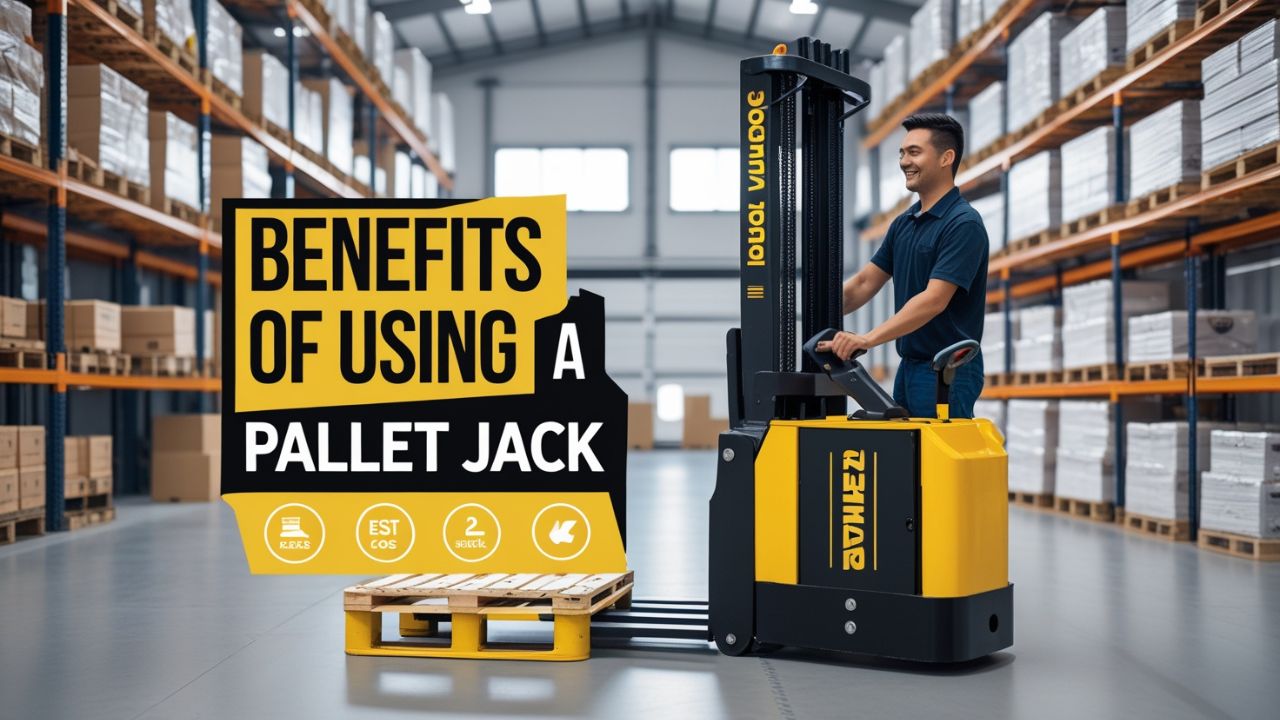
Benefits of Pallet Jacks: A Guide to Manual & Electric Pallet Trucks

Moving pallets is basic warehouse work. You don’t always need a forklift for it. Often, a pallet jack is the smarter tool. It’s simple, affordable, and safe. Here’s what you gain by using one.
1) Lower costs from day one
Pallet jacks cost far less than forklifts. Even powered models are cheaper to buy or rent. That matters if you’re watching cash flow. You get reliable load movement without a big capital hit. For many small operations, this is the difference between getting started and getting stuck.
2) Fast to learn, easy to use
A pallet jack doesn’t need a long training session. Show someone how to raise, move, and lower a load, and they’re set. That makes shift changes smoother. It also helps when you bring in temporary staff. Less downtime. Fewer mistakes.
3) Quicker short moves
Most pallet moves are short—dock to rack, truck to staging, aisle to aisle. A pallet jack shines here. One person can move a full pallet with steady control. You finish more tasks in less time, without waiting for a forklift to free up.
4) Less strain and fewer injuries
Manual lifting causes back and shoulder problems. A pallet jack keeps the load on the wheels, not on your team. That reduces strain, slips, and awkward carries. Electric pallet jacks go a step further by powering the travel and lift. That’s helpful on long shifts or heavier routes.
5) Works in tight spaces
Narrow aisles and busy stockrooms are tough for bigger machines. Pallet jacks turn sharply and need less clearance. You can position a load right where it’s needed, even in crowded areas. This is a real win for retail backrooms and small warehouses.
6) Low maintenance, less downtime
Manual pallet jacks have few parts. Keep the wheels in good shape and the hydraulics topped up, and they run for years. Electric jacks need charging and basic checks, but still less than forklifts. Fewer breakdowns mean steadier work and fewer service calls.
7) No special license in most cases
Manual pallet jacks don’t typically require certification. Basic training and safety guidelines are enough. That gives you flexibility in staffing. You can assign moves to more people, not just licensed drivers. For powered jacks, a short familiarization session usually covers it.
8) Fits many jobs and industries
If goods come on pallets, a pallet jack helps. Warehousing, retail, food and beverage, pharma, printing, light manufacturing—each can use it daily. You can also choose the right type for the job: stainless steel for hygiene areas, high-lift for packing stations, or built-in scale models when you need weights on the fly.
9) Easy to store, quick to deploy
Space is always tight. A pallet jack tucks under a rack or against a wall. No special bay. No exhaust rules. You roll it out when work starts and roll it back when done. Simple.
10) Quiet and clean operation
Manual jacks are silent and produce no emissions. Electric jacks are quiet too. That helps in indoor spaces and during off-hours stocking. It also avoids ventilation issues that come with engine equipment.
11) Safer by design
Pallet jacks lift only a few inches. Loads stay low and stable. That reduces tip-over risk and falling goods. Operators can see clearly and move at controlled speeds. Add basic habits—keep paths clear, don’t overload, face slopes correctly—and your risk drops further.
12) Better flow and accuracy
When moving pallets is easy, teams stage orders on time, keep docks clear, and return empty pallets fast. That improves inventory flow. It also reduces mix-ups because loads go straight from point A to point B without hand carrying or repacking.
Manual vs. electric: quick guidance
- Manual is best for short runs, light to medium loads, and quick turns. Low cost, minimal care, high control.
- Electric is best for frequent moves, heavier pallets, longer routes, and ramps. Less strain, faster cycle times, consistent output.
If you’re unsure, watch your floor for a week. Count pallet moves, note distances, and track any bottlenecks. If fatigue or delays are common, electric helps. If moves are brief and infrequent, manual is fine.
Small tips that pay off
- Match fork length to your pallets. Standard forks fit most jobs; longer forks for oversized loads.
- Choose the right wheels. Poly wheels for smooth floors and quiet rolling; nylon for heavier loads and tougher surfaces.
- Set a check routine. Quick daily look at wheels, forks, and hydraulics. For electric, plug in on schedule and keep chargers where they’re easy to reach.
The bottom line
A pallet jack is a simple tool that solves a big problem: moving heavy pallets safely and fast. It cuts costs, reduces strain, and keeps work flowing. For many teams, it’s the first tool they grab and the last one they’d give up. Use manual for simple, short moves. Use electric when distance, weight, or volume rise. Either way, you’ll get steady results without the overhead of a full forklift fleet.
FAQs
1) Can a pallet jack replace a forklift?
Not fully. A pallet jack moves loads at floor level and for short distances. A forklift lifts high, stacks, and handles heavier, longer routes. Many sites use both.
2) How much can a pallet jack carry?
Most manual jacks handle about 2,000–5,500 lbs (900–2,500 kg). Check the rating plate on your unit and don’t exceed it.
3) Do we need special training?
Manual jacks don’t usually require certification, but you should give basic safety training. Powered jacks need a short orientation on controls, charging, and safe travel.


